 By
By Full disclosure: I am an unabashed lover of ribeye. It is, in my opinion, the most flavorful of the various cuts of steak, and is the most versatile. What can make ribeye even better? The Ribeye cap steak can, and this post will show you how to make them at home.
Firstly, what is a ribeye cap steak? Let’s take a look at a ‘standard’ ribeye. The ribeye is composed of three major muscles (as illustrated below): the filet, the tail, and the star of today’s show, the cap. The cap is the most tender and marbled part of the ribeye, so if we had an entire steak of just the cap muscle, that’ll be great. Right?

Purchasing the proper cut
Head to your local butcher, restaurant supply, or big-box warehouse store and purchase a whole beef ribeye. It can be boneless or bone-in, but since we are not going to need the bones, why bother. If you notice, it looks somewhat similar to prime rib. Prime rib is cut from the same rib subprimal of the cow. You could also use a smaller 3-4 bone prime-rib for this, but your yield will be much smaller. I nabbed this whole ribeye at Costco, for a fairly decent price. Now time to break it down with the help of a filet knife and a slicing knife.
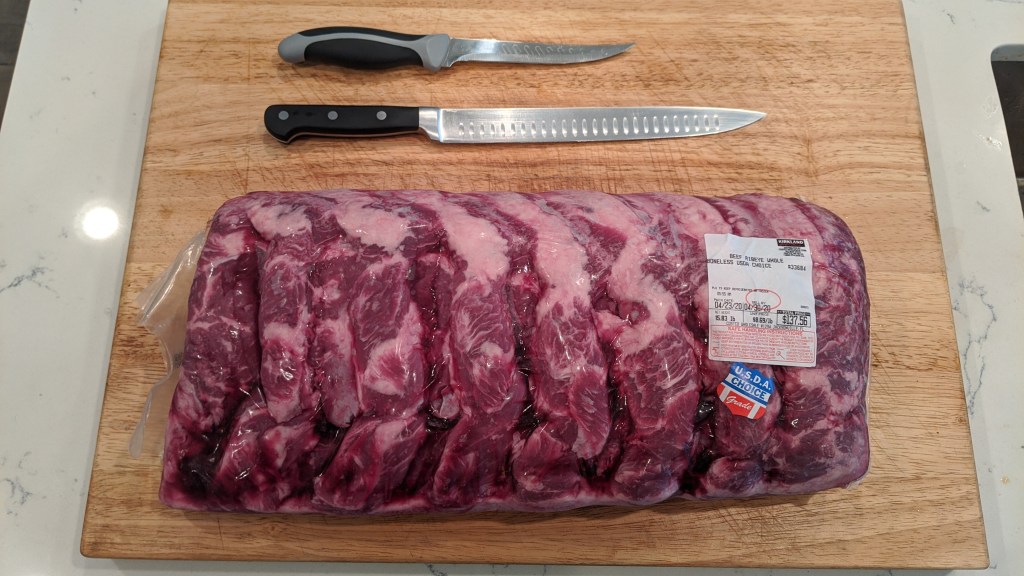
Separating the ribeye into its constituent muscles
The first step in this process is to separate the tail muscle. This and most of this work requires very little cutting. Most of the work is pulling muscles apart. The tail can be separated pretty easily.
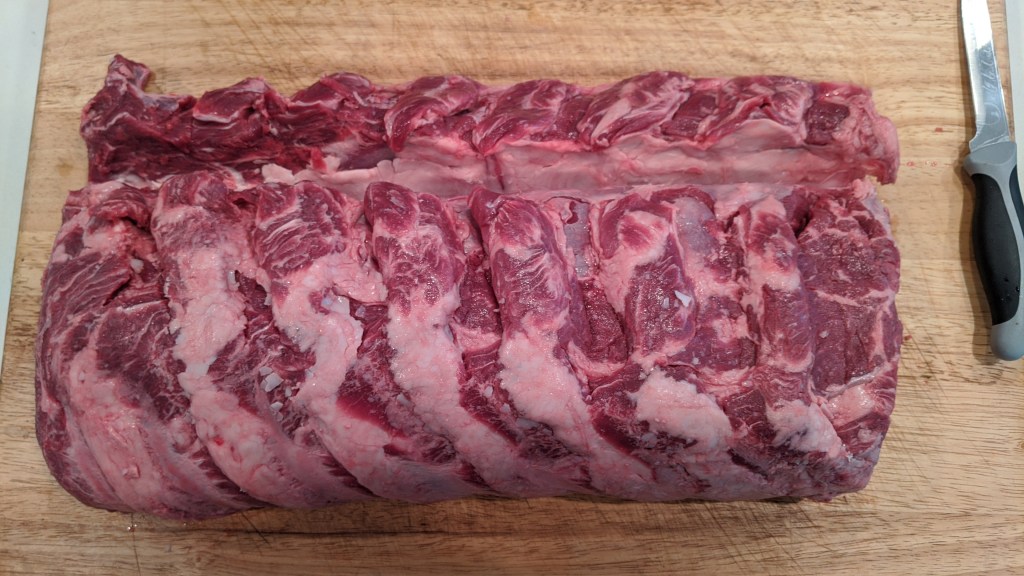
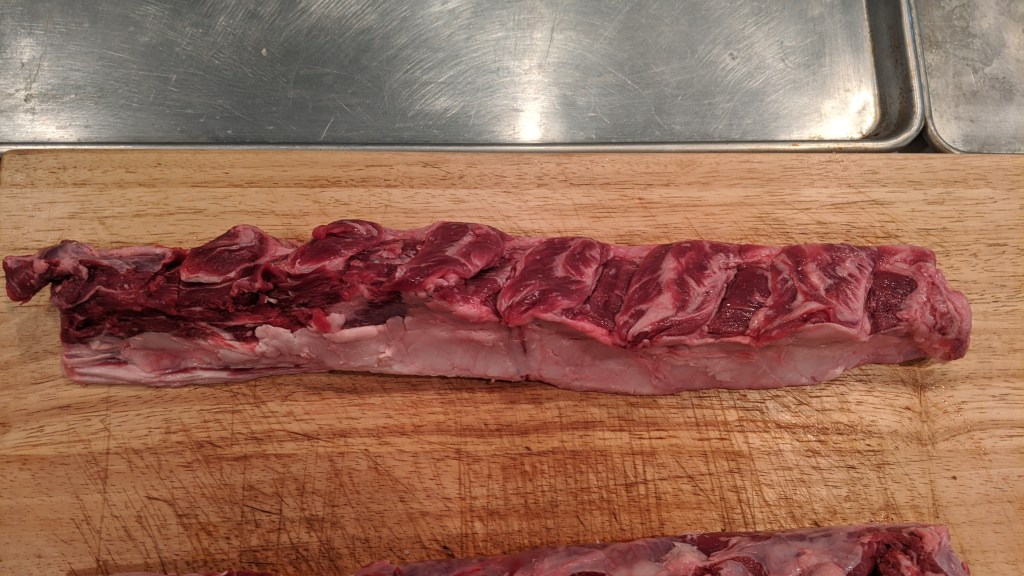
Once the tail is separated, put it aside for now.
Next, we move on to separating the filet from the tail. Flip the entire ribeye over so that the fatty end is facing upward.
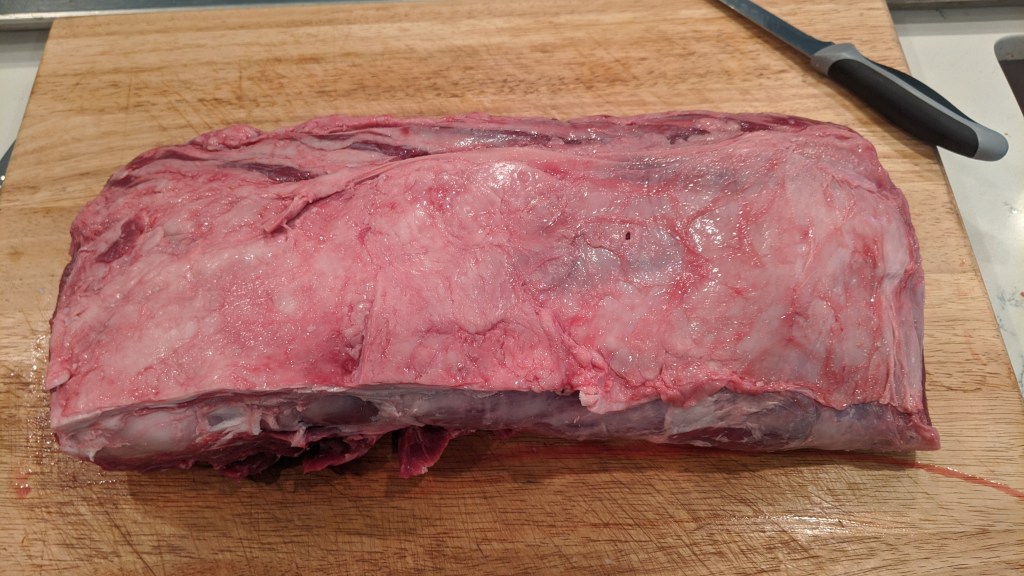
Using the filet knife, lightly score the bottom of the cap so that you can start to separate the cap muscle. Occasionally, you’ll need to use your filet knife to cut sinew to make the pulling easier.
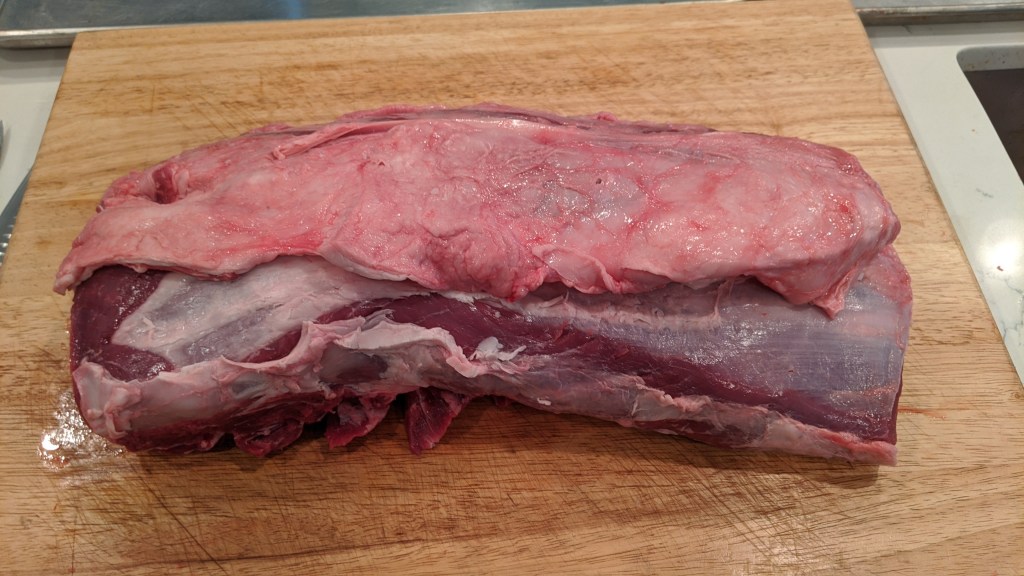
Continue pulling until you have the muscles completely separated.
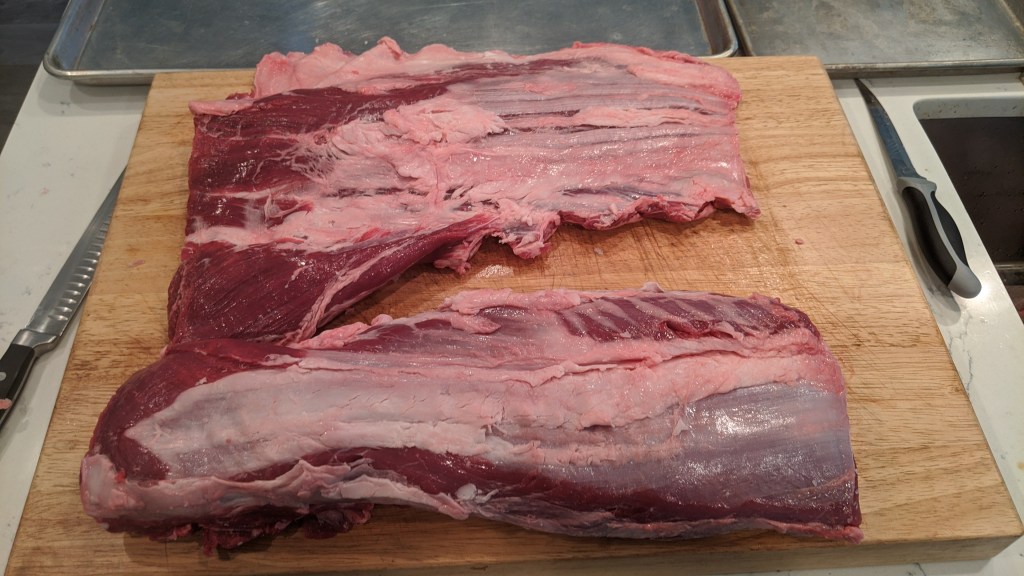
Now, put the cap aside, and let’s work on the filet. The filet has a decent amount of silverskin, which can be removed by leveraging a knife to help you peel back the silverskin as one piece.
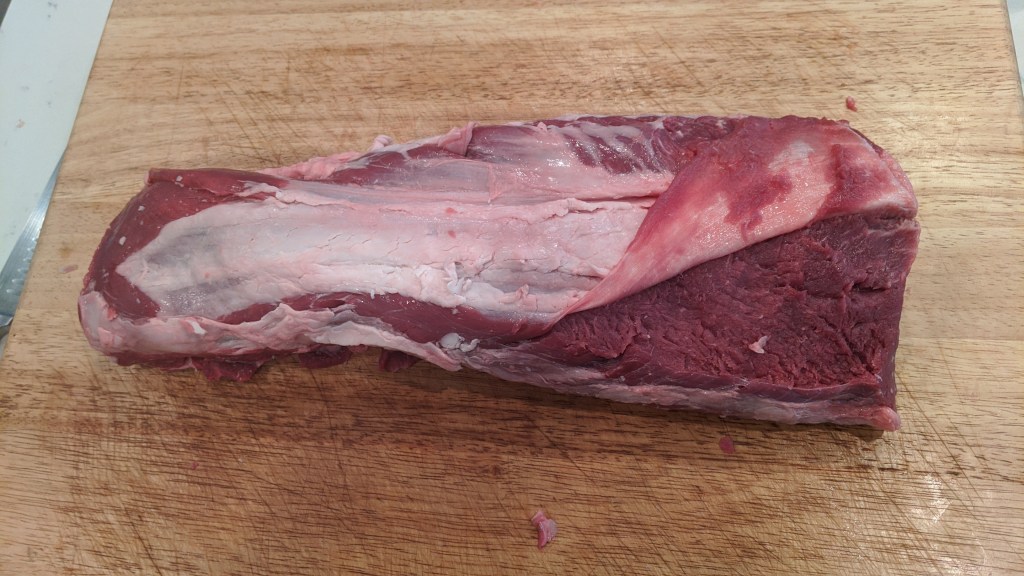
When completed, your filet will look nice and pretty with little to no silverskin left.
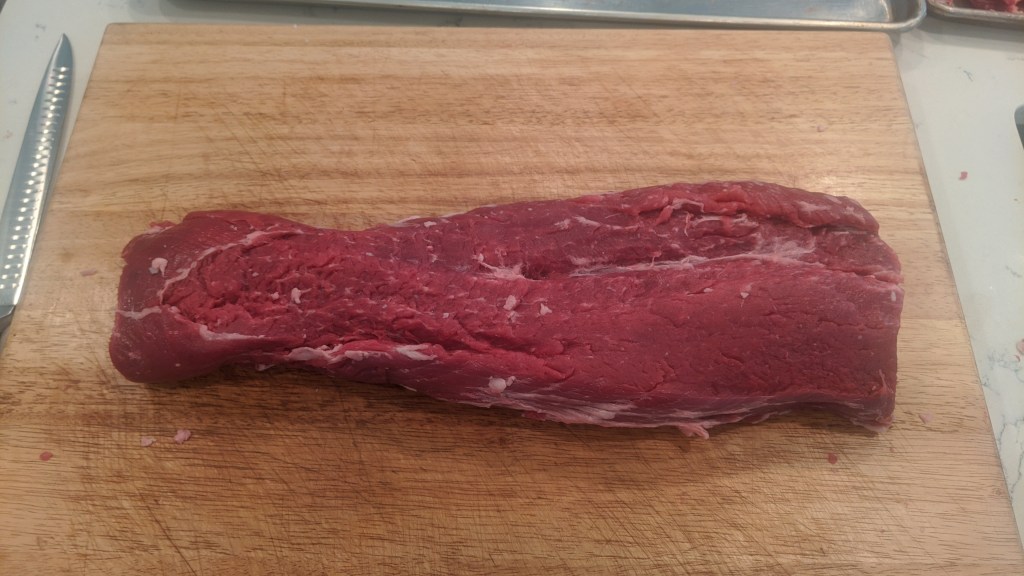
Let’s put him aside as well. Now, off to work on the cap. The cap is long and flat, but sometimes (such as in this case) is oddly shaped. So I am going to ‘square up’ the cap so that when we roll it up, uniform steaks are produced.
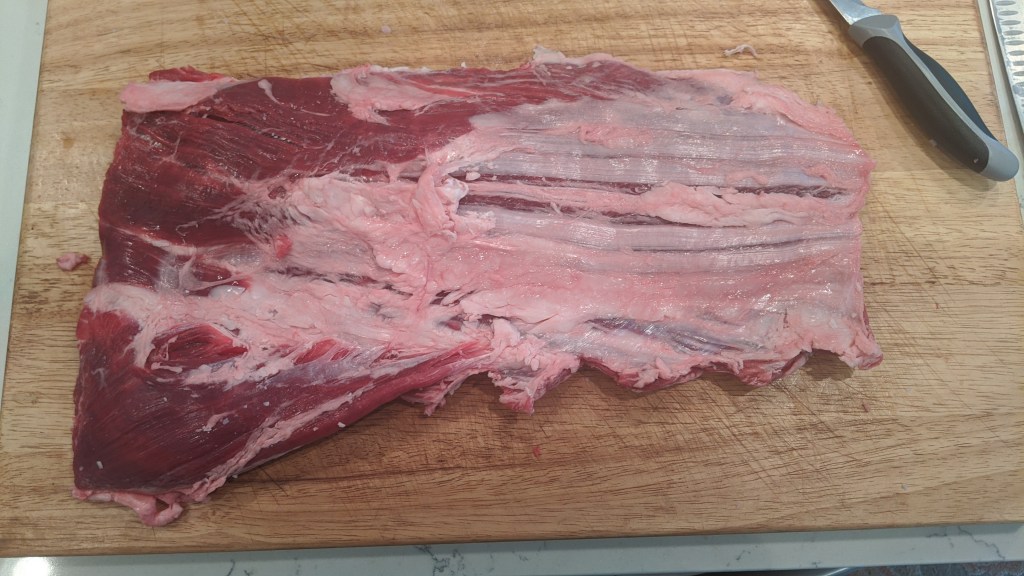

Taking your filet knife, remove any silverskin and sinew on the cap. It should be fairly clean, but it doesn’t have to be perfect.
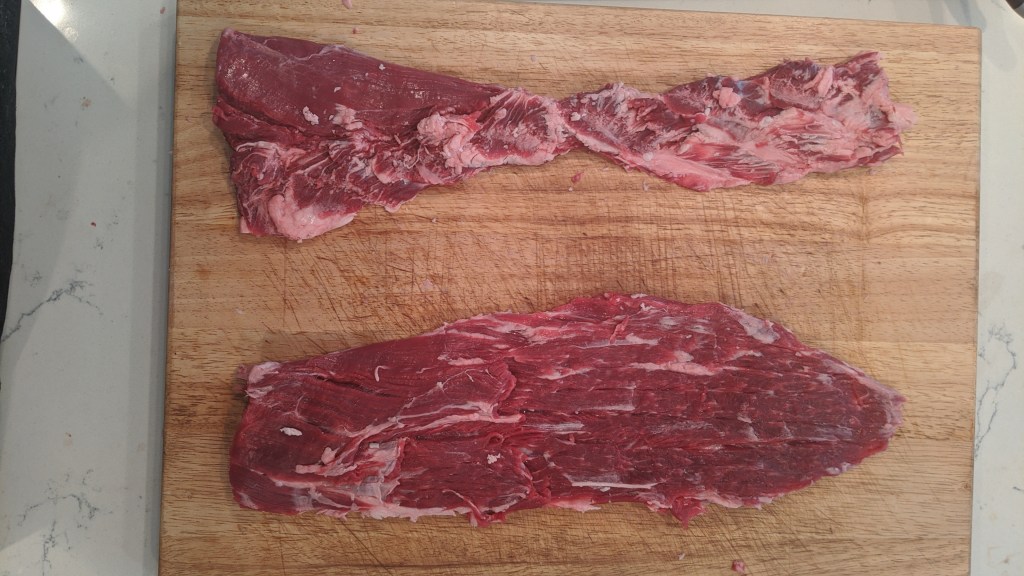
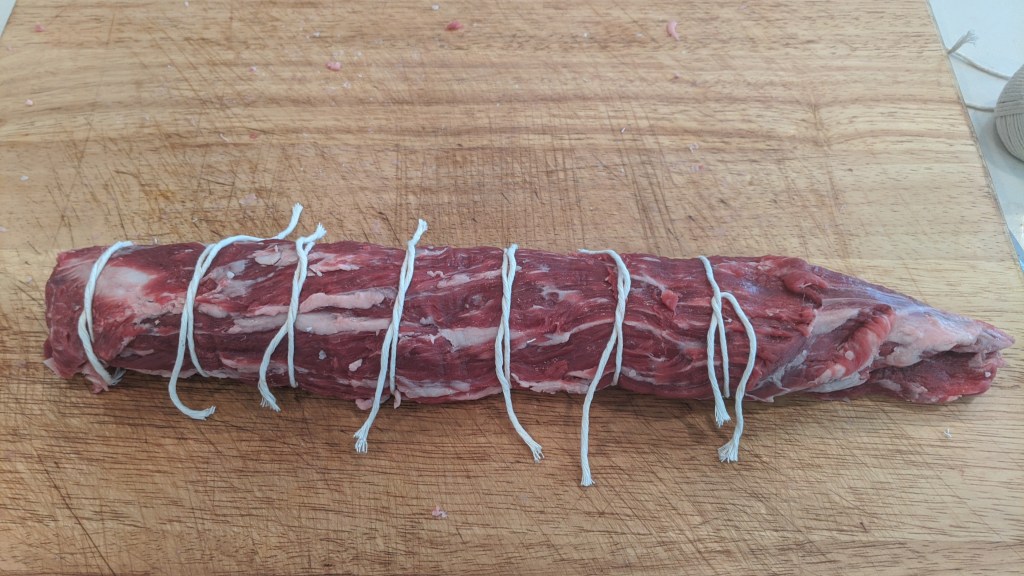
Let’s put the extra (the top part) aside. Roll up the cap, and tie it off using butcher twine about 2 inches (5cm) apart.
Let’s go cut something
Using your slicing knife, cut your steaks from the rolled up cap muscles. You may need to fold in the end of the cap to cut the last steak, and that’s OK.
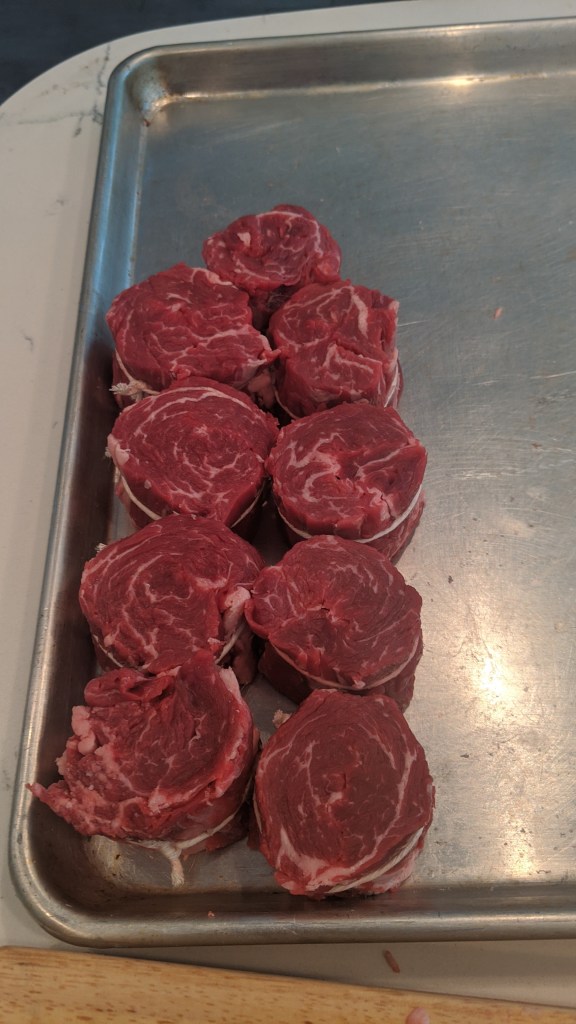
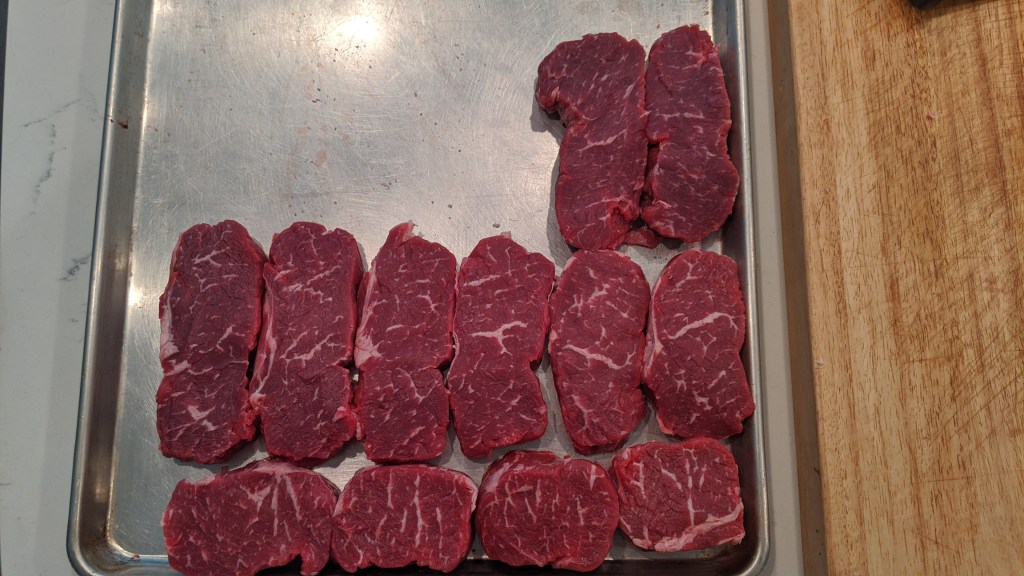
This cap muscle yielded 9 ribeye caps. Now, let’s grab the filet muscle. On the smaller end of the filet, which is narrower, I like to cut steaks 1.75″ (4.5cm) thick. On the larger end, I will generally cut 1.25″ thick (3.1cm). There are no wrong answers here, cut to your desired thickness. My bench scraper is useful here in helping me to get accurate cuts.
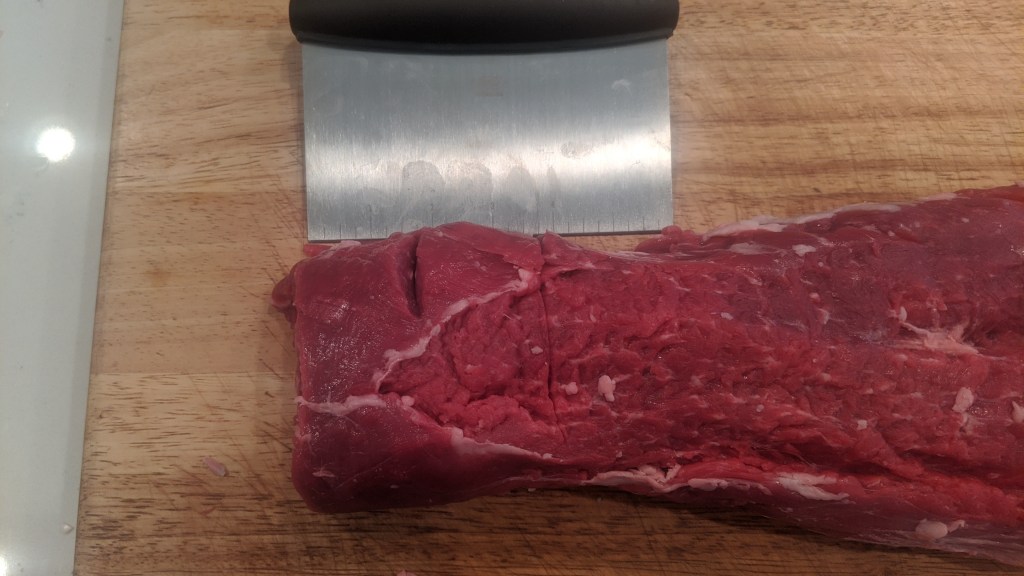
This filet muscle yielded 12 filets.
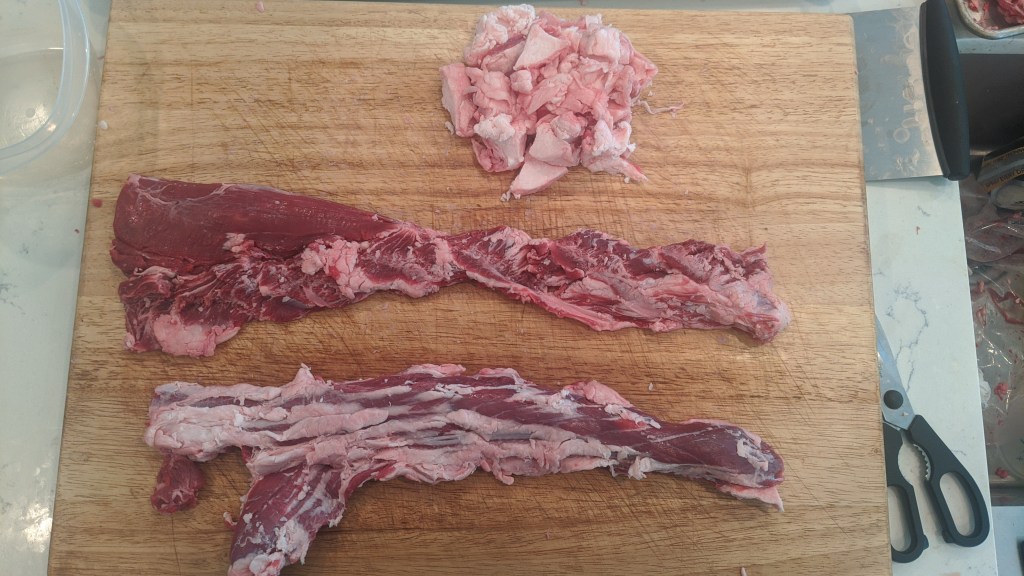
Now, lastly, what about the tail muscle and the extra cap trimmings? I generally trim most of the extra fat from them, cube them up and use to make ground ribeye. The extra fat is rendered to make tallow. And if you haven’t had potatoes cooked in tallow, you are missing out on one of life’s great pleasures.
Final Product
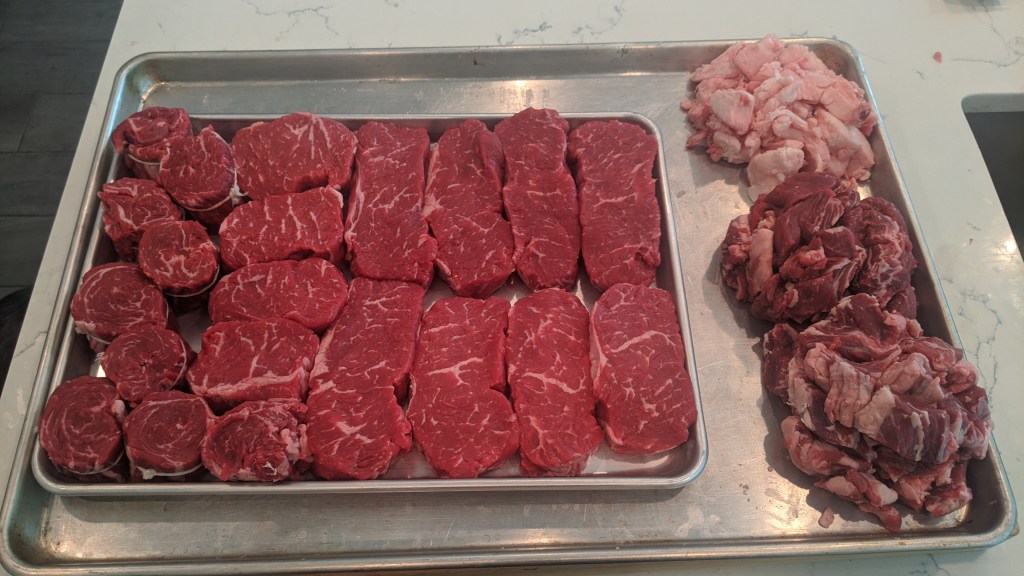
All in all, this whole ribeye yielded:
- 9 Ribeye caps
- 12 Ribeye filets
- 2lbs, 12oz (1.2kg) in trimmings for ground beef
- 12oz of fat to be rendered to make tallow.

 An Adventure in Cast Iron
Very interesting. Liked your way for cutting this up. Nothing goes to waste. Silver skin goes to fur-babies.
LikeLike